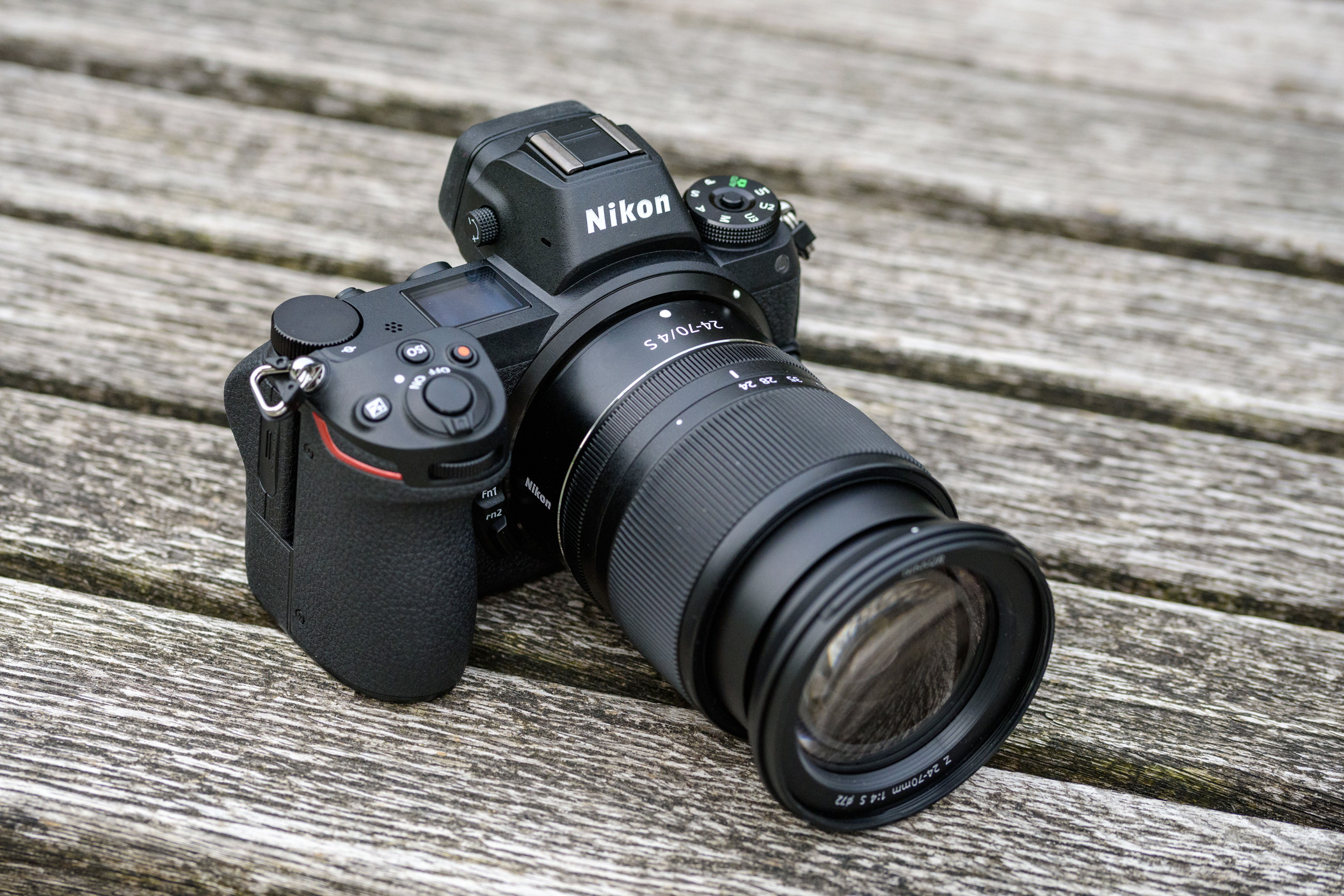
The Nikon Z7 is not only their first full-frame mirrorless camera, it is also one of the company’s best cameras. Inside a sleek and compact mirrorless camera body, the high-res sensor 360 camera delivers superb image quality, and its speedy processor delivers great all-around performance. Of course, there is room to grow and improve, and there aren’t many native lenses for the Z7 yet, but Nikon’s first full-frame mirrorless camera is an excellent one.
Pros
Familiar design in a compact form; Rugged build quality; Gorgeous EVF; Excellent image quality; Good autofocus; In-body image stabilization; Good 4K video recording.
Cons
Single card slot; Not as good at subject tracking as some Nikon DSLR cameras; Limited native lens selection (although adapter works well); Limited buffer depths.
Price and availability
The Nikon Z7 released in September 2018 and the body sells for just under $3,400 USD. The Z7 is also available in a kit with the new 24-70mm f/4 S lens and/or Nikon FTZ adapter.
Nikon Z7 Overview
by Mike Tomkins
Things have been looking up for Nikon lately. As the company rounded out its year-long celebration of its hundredth anniversary last year, its impressive D850 DSLR ruled the roost as winner not just in the DSLR category of our 2017 Camera of the Year awards, but also the overall victor. But while it has clearly managed something really special with the D850 DSLR, Nikon obviously couldn’t neglect the burgeoning mirrorless market, which has continued to gain in popularity globally at the expense of DSLR sales. The potential of mirrorless has been made most obvious by the speed with which rival Sony’s Alpha mirrorless camera line has gained in popularity and sales, even as Nikon has had to pull back from its own mirrorless offerings of days gone by due to lackluster sales.
Looking back at the 1-series and decade one of the mirrorless revolution
By coincidence, mirrorless cameras themselves were also celebrating an anniversary last year. It was a full decade since Olympus and Panasonic made waves in mid-2008 by announcing their Micro Four Thirds mirrorless camera standard. Nikon responded some three years later in mid-2011, launching its own Nikon 1 mirrorless lineup. The 1-series cameras were groundbreaking in some respects, with the world’s first hybrid autofocus system in an ILC thanks to on-chip phase detection pixels, and capable of almost legendary burst-shooting and video-capture performance. They also took good advantage of the size and weight advantages possible with mirrorless designs, being far sleeker and more compact than their DSLR brethren.
Where the Nikon 1-series stumbled, though, was in the very place which allowed most of these other advantages: The sensor used in Nikon’s early mirrorless models, while still huge in comparison to the compact cameras which were then just reaching their sales peak, was nevertheless relatively tiny when compared even to the APS-C sensors typically used in DSLRs at the time. While that sensor size allowed the small cameras and lenses for which the 1-series was known, as well as their incredible performance and autofocus, it also translated to a noticeable reduction in image quality versus larger-sensored rivals. Nikon put its heart and soul into the 1-series, but it still faded into the history books, underappreciated and unloved by most.
A brand-new body that nevertheless feels like an old friend
The cluster of controls around the shutter button, for example, is identical to the D850 almost right down to the individual button placements. You’ll also find twin control dials front and rear, plus on the rear, a joystick control and an eight-way directional pad with central OK button. And nearby, you’ll also find AF-ON and ‘i’ buttons. Delete and Play buttons can be found top left of the rear deck where you’d expect, and they’re even separated by a little ridge as in the D850.
Really, the biggest UI differences are that four of the buttons which would have lined the left of the LCD on the D850 have instead jumped to the bottom right of the rear deck, and there’s a traditional Mode dial with central lock button on the top deck in place of the wedding cake-style release mode dial topped by buttons on the D850. Getting familiarized with the Z7’s controls should not take Nikonians long at all.
 Site Title
Leave a comment